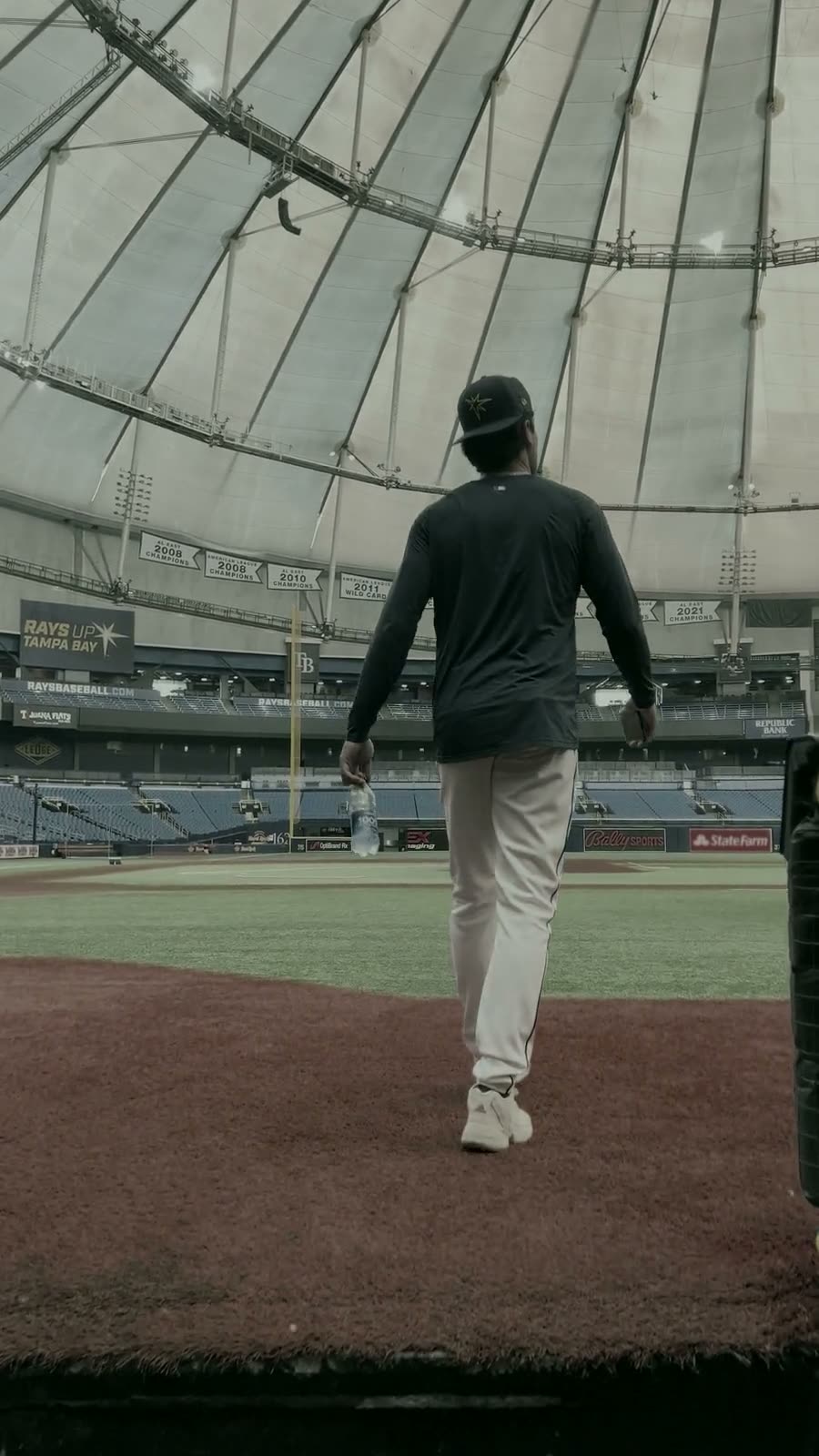

Ten minutes a night: a short lesson on his phone and a page in his real notebook. Built by a former pro who spent six years learning what to do after the out.
$39 a month · Cancel anytime
 D1 All-American
 25th-round senior sign
 6 years in pro ball
 Triple-A
 Rays organization
 Phillies organization
 Nationals organizationBack from back surgery
He barrels everything in practice. Then the lights come on and it's a different kid in the box.
Silence, a slammed door, or the whole game replayed out loud. Nobody feels better.
One strikeout turns into three. One error follows him to the plate for the rest of the game.
A .300 hitter is an All-Star, and he still makes an out seven times out of ten. Kids who never learn what to do with those seven outs start to believe every one of them says something about who they are.
Kids who quit sports stop, on average, at about age 13. (Aspen Institute Project Play, 2026)
The whole major leagues hit .245 in 2025. The best players in the world make an out most of the time. (Baseball-Reference)
This is a real night in the app, exactly what your son sees. Tap any step to jump to it.
One short lesson from me on the moments that actually get him.
A page in a real notebook. Writing it down is what makes it his, not just another screen.
A photo of the page logs the day. The next lesson opens tomorrow, and his chapter fills in.
Each chapter is 28 nights. The first three build the foundation. The rest take on the moments every player hits sooner or later.
- 1AwarenessFoundation
Practice him and game him: seeing the gap.
- 2ToolsFoundation
The anchor, the reset, and the routine.
- 3IntegrationFoundation
Taking the tools into real games.
- 4The Slump
What a slump actually is, and the way out.
- 5The Big Moment
Bases loaded, two outs, everyone watching.
- 6The Reset
Letting the last at-bat go.
- 7The Bench
Competing when he isn't playing.
- 8The Comparison Trap
Him versus last month's him.
- 9The Body
What pressure does to his body.
- 10The Voice
The voice in his head at the plate.
- 11When No One's Watching
The work nobody sees.
- 12Why You Play
Keeping the game his.
Real texts from real families. Names left off for their kids' privacy.
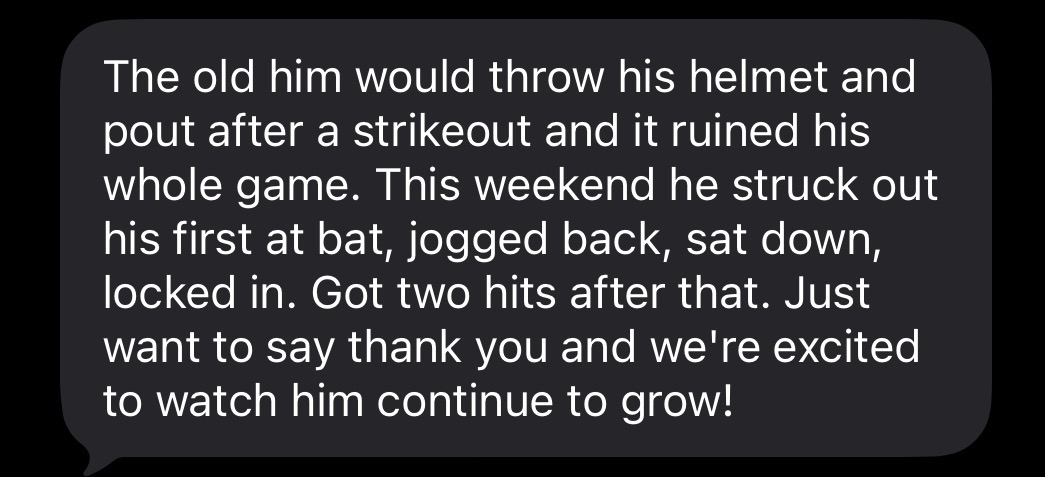
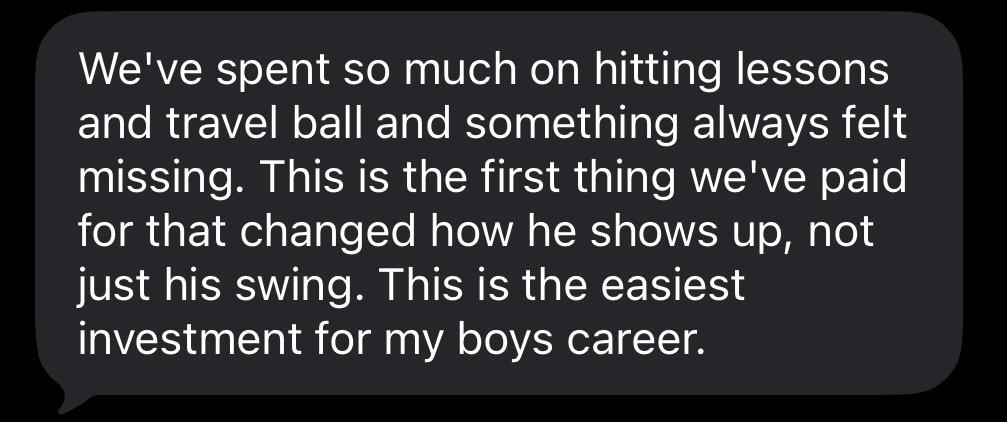
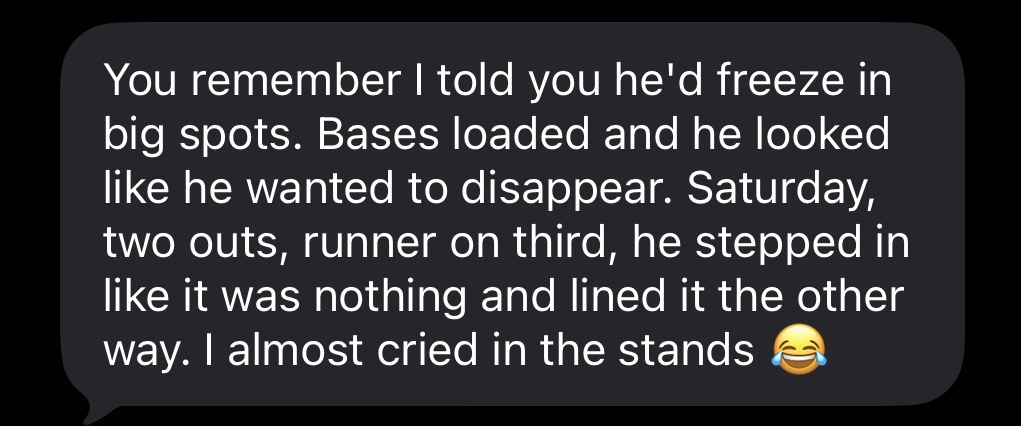
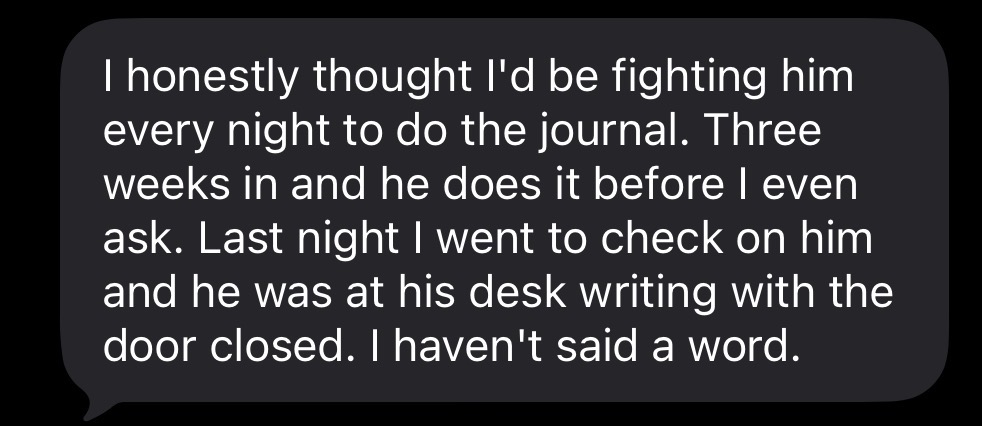
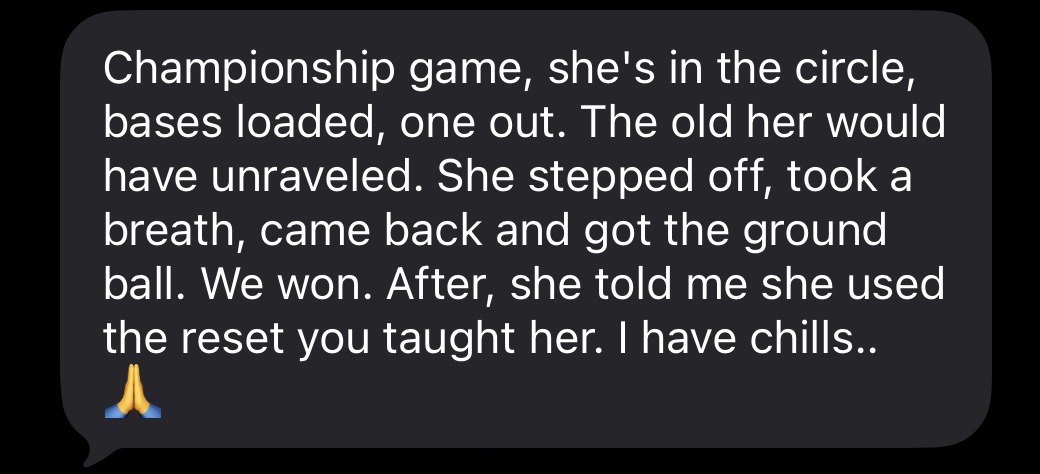
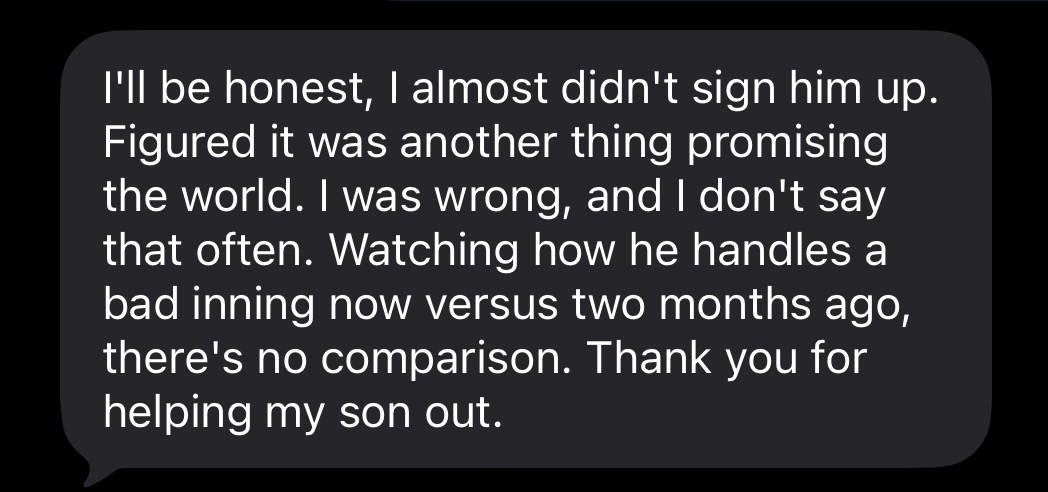
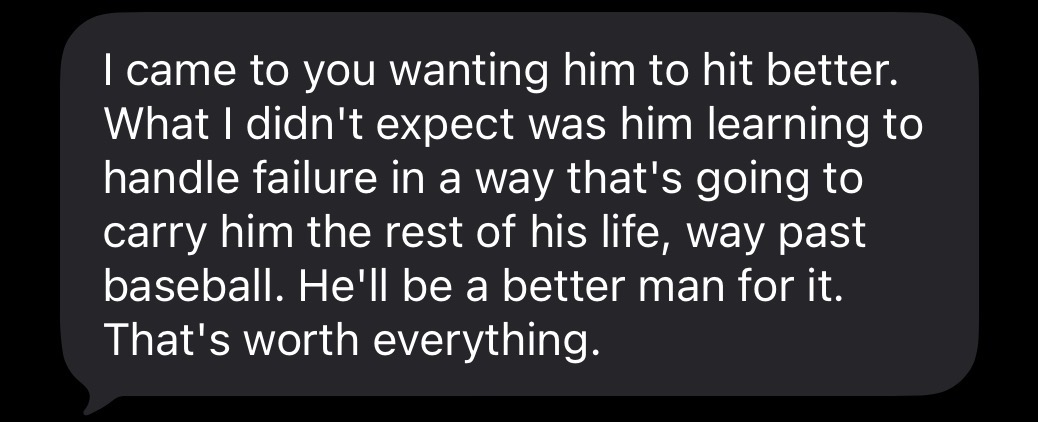
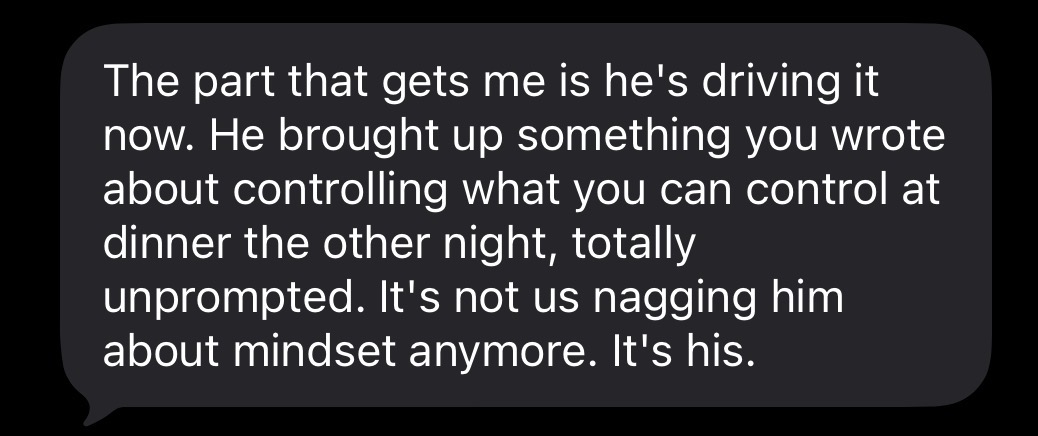
Most apps are forgotten within a week. So this one was built so nobody has to nag. Your job is the easy part: ask him what he wrote.
About ten minutes. Short enough to do on a school night, even after practice.
One lesson opens at a time and the next one only opens after he does the day. Miss a night and it's right where he left it.
It learns when he usually does it and nudges him about an hour before.
The week fills in. Chapters seal. There's always one more page to close out.
Routines, self-talk and mental reps aren't hunches. They're some of the most studied skills in sport psychology, and each one is built into his nights.
Pooled effect sizes from published meta-analyses. Each study measured differently, so read the bars as rough size, not a ranking.

I'm Jordan. D1 All-American, then a 25th-round senior sign. Nobody drafted me for my talent, and I was never the most talented guy in the room. I spent six years in pro ball anyway, came back from back surgery, and reached Triple-A.
What carried me was the mental side, built one small rep at a time, starting as a kid. This is that system, written for the player your son is right now.
The average family spends about $1,000 a year on a child's main sport. This is the part the lessons and travel ball don't cover.Aspen Institute Project Play, 2025
About $1.30 a night. Cancel anytime.
- ✓A new lesson from Jordan every night, 12 chapters deep
- ✓Notebook check-ins and progress he can see
- ✓Game-day tools: pre-game routine, reset, and game log
- ✓A quote from the best in the game every morning
- ✓The Parent Playbook, plus every new playbook I release
Starts tonight. Cancel anytime.

The Parent Playbook: what to say, when to say nothing, and a section for families with more than one player. Plus every playbook I release.
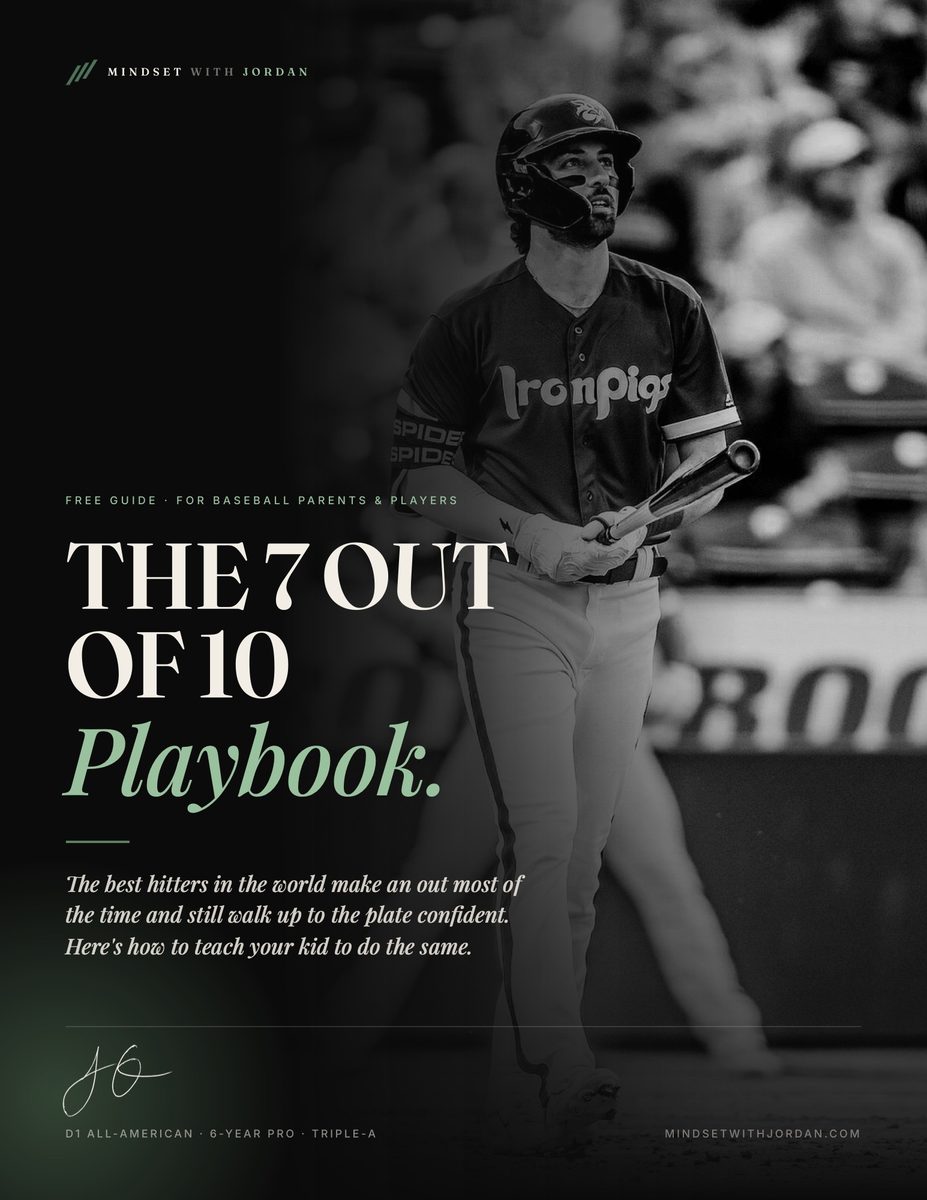
The best hitters in the world make an out most of the time and still walk up to the plate confident. Here's how to teach your kid to do the same.
- 01The two-second routine
- 02The 3-step reset
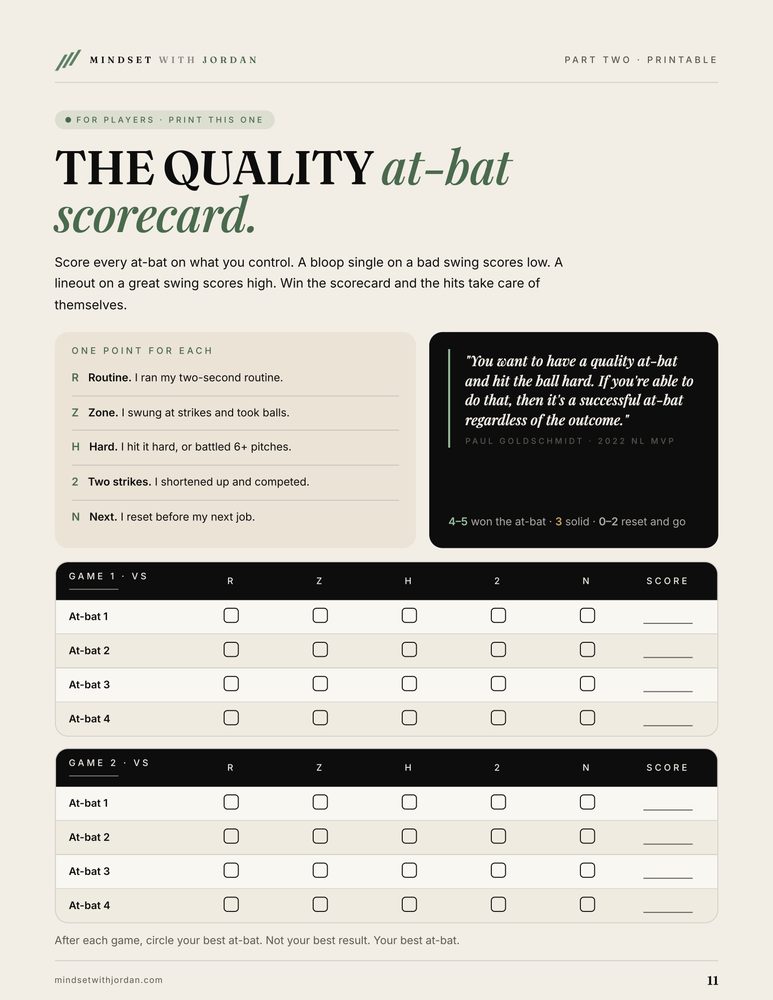
- 03The quality at-bat scorecard
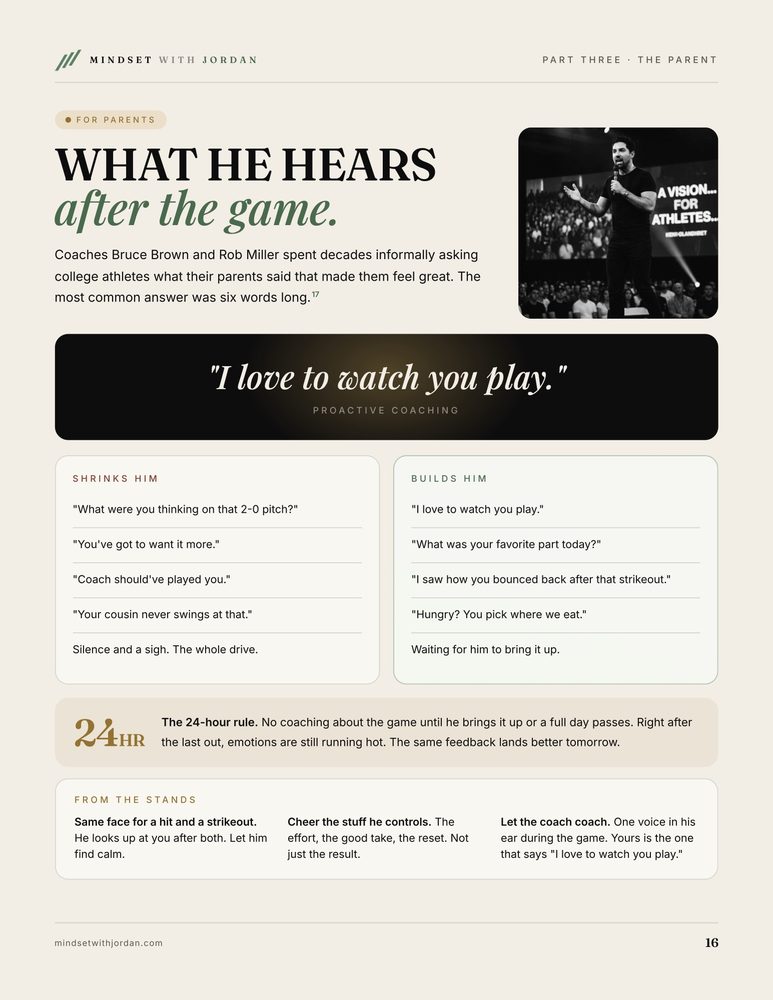
- 04What he hears after the game
- 05The 7-night reset
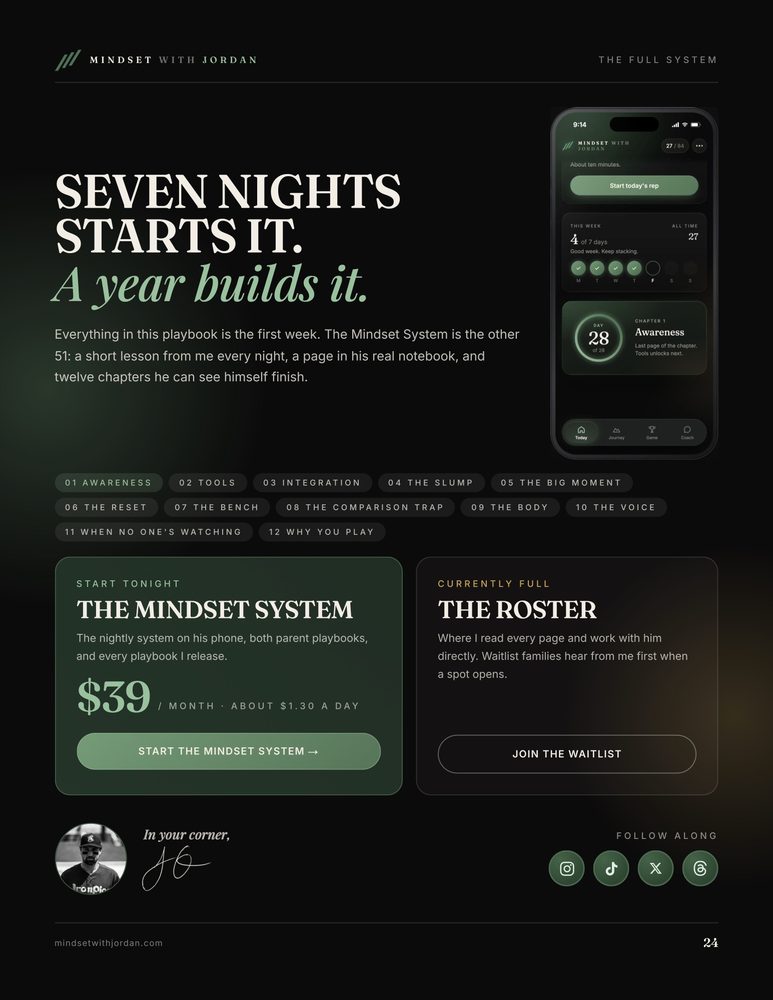
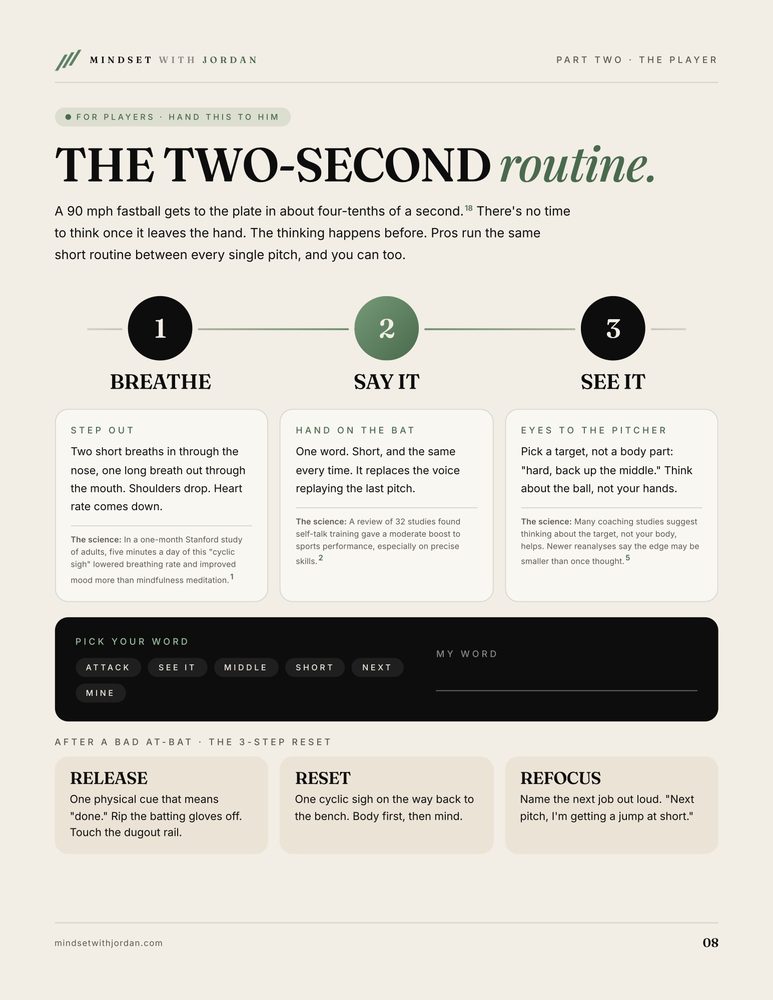
The Roster is where I read every page and work with the athlete directly. It's full right now. Waitlist families hear from me first, personally, when a spot opens.
Mindset With Jordan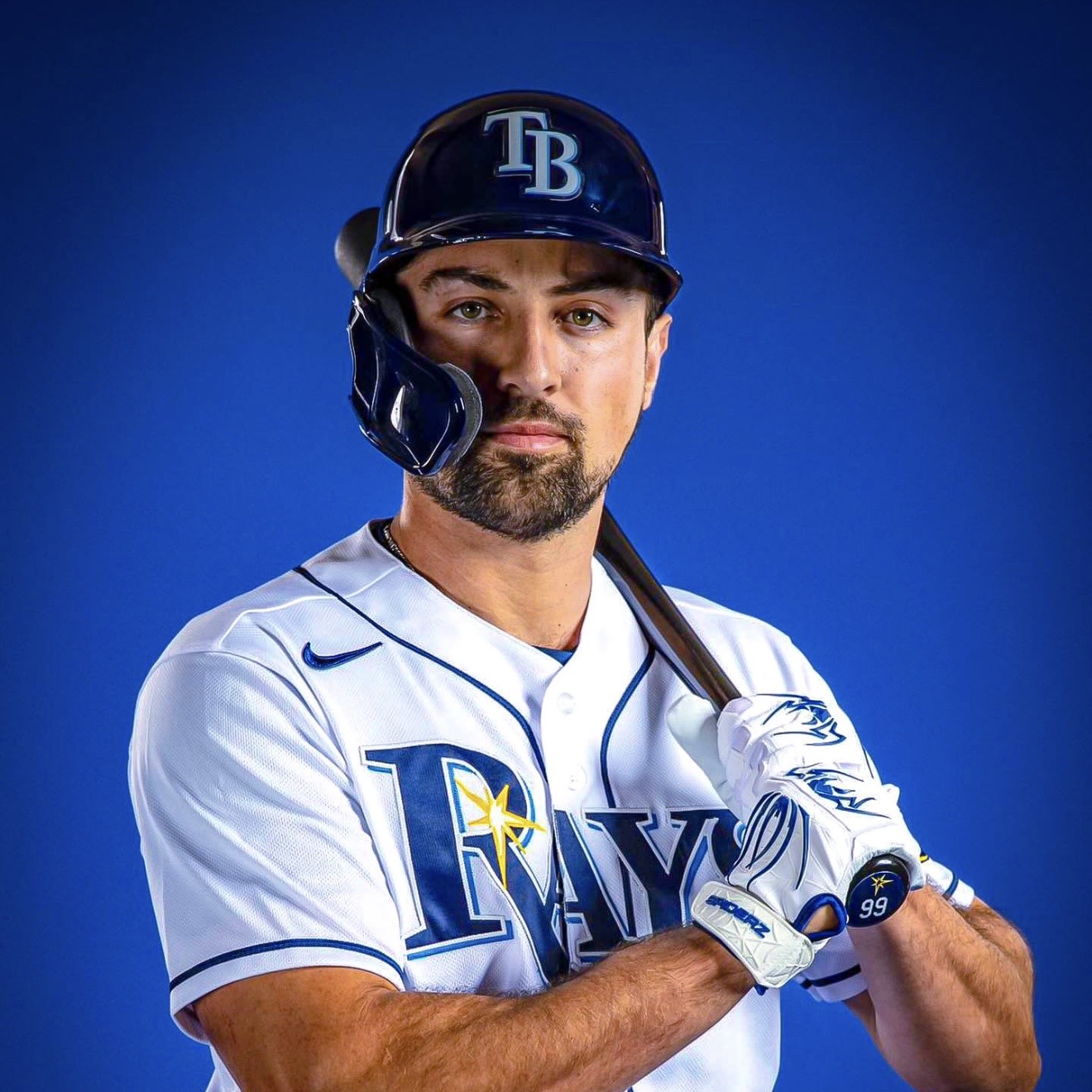
Something else? Email jordan@mindsetwithjordan.com. I answer myself.
Online, anytime, at Manage billing (bottom of this page). Or email jordan@mindsetwithjordan.com and I'll cancel it that day. Either way, he keeps access through the time you already paid for.
It's written for baseball players around 11 to 18. Younger players do well with a parent reading along the first few weeks.
A phone or tablet and a notebook. The app opens from his home screen, so there's nothing to download from an app store.
Lessons wait for him, and the reminder comes around the time he usually does it. If a week slips, he picks up where he left off. And if it's just not for him, cancel.
No. It's mental skills training for competition, the way a hitting coach trains the swing. If your child is dealing with anxiety or depression, please talk to your pediatrician or a licensed professional.
The Mindset System is the nightly program. On the Roster, I also read every page and work with him directly. The Roster is full right now, with a waitlist.
Yes. The lessons are written in baseball language, and softball players use it the same way.
That part isn't up for debate. What you can change is what it costs him afterward. Give him ten minutes a night that teach him what to do with it.
$39 a month · Cancel anytime